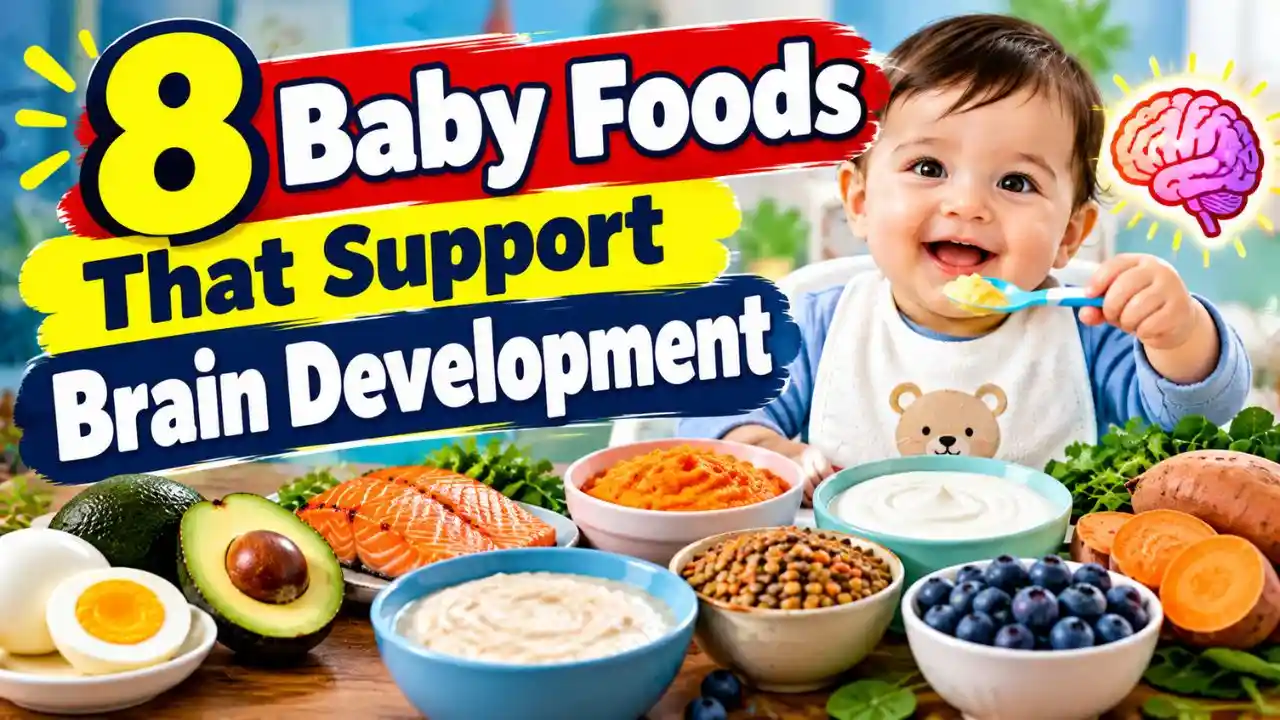
A baby’s brain develops fast in the first years. Because of that, good food matters for healthy growth. When you start solids, the choices you make can supply key nutrients. These nutrients help the brain, support the nervous system, and back overall health.
There are common foods that can fit into a baby diet. Lentils bring iron. Eggs add nutrients. Avocado provides fats that many growing bodies need. No one food will make a baby smarter. But a mix of foods that fit your baby’s age can help the brain develop in a normal way.
Below are eight foods to consider when your baby is ready for solids, often near six months.
Eggs A Source of Choline for Brain Development
Eggs are full of important nutrients. They have protein, choline, vitamin B12, and more. Choline plays a role in normal brain development. It also helps the body make acetylcholine, which is linked to memory and learning.
How to serve: Cook eggs all the way through. Mash them until they are soft. You can also try soft scrambled eggs as your baby learns to handle new textures.
Why it matters: Eggs bring multiple nutrients that support healthy growth. They can work well in a varied diet meant for solids.
Salmon: Fats That Help the Brain
Salmon has omega-3 fats, including DHA. DHA helps form key parts of the brain and eyes. Salmon also gives protein plus other nutrients for steady growth.
How to serve: Cook the salmon until it is fully done. Check for and take out every bone. Then mash it well or flake it into a texture your baby can handle.
Why it matters: Using the right low-mercury fish in a baby’s meals can add nutrients needed for brain and eyesight development.
Iron-Fortified Baby Cereal: For Thinking Power
Iron plays a role in brain growth. It helps move oxygen in the body and keeps the nervous system working as it should. As babies grow and start other foods, their iron needs rise.
Iron-fortified cereal can make it easier to cover those needs.
How to serve: Follow the box steps to make the cereal. Change the thickness to match your baby’s stage. You can also include other iron-rich options, like pureed meat, lentils, and mashed beans.
Why it matters: Feeding iron-rich foods often can lower the chance of not getting enough iron during this growing period.
Avocado: Healthy Fats for Little Ones
Avocado has unsaturated fats, fibre, and a mix of vitamins and minerals. It is also easy to mash, so it works well for babies who are just starting solids.
Fat from food gives energy. It also supports the brain as it grows fast in the early months.
How to serve: Choose a ripe avocado. Mash it well, or cut it into very soft bits that match your baby’s skill level.
Why it matters: Avocado can make meals more interesting and add energy. Still, use it with iron-rich foods and other nutrient foods. Do not rely on it as the only food.
Lentils: Protein and Iron from Plants
Lentils offer plant protein, iron, folate, and fibre. These help with growth and can fit into a baby’s day-to-day nutrition.
How to serve: Cook lentils until they are very soft. Then mash them or blend them into a smooth puree. You can stir them into mashed pumpkin, mashed sweet potato, or other soft vegetables.
Why it matters: Lentils are a good option for families who want more plant foods in their baby’s meals.
For better iron uptake, serve lentils with vitamin C foods. Examples include mashed tomato or soft cooked broccoli.
Full-Fat Yoghurt (Plain): Protein and Vitamin B12
Plain, pasteurised, full-fat yoghurt has protein, calcium, vitamin B12, and other nutrients that help babies grow. It is also fairly smooth, so many families find it simpler to use when solid foods start.
How to serve: Start with a small spoonful. Or mix it with mashed banana. You can also mix it with cooked pear that is soft.
Why it matters: Yoghurt can add helpful nutrients to a varied diet. It does not need a lot of steps.
Choose plain, unsweetened yoghurt. Check the label and skip products that include added honey. Cow’s milk can be used in some foods once a baby is about six months old. Still, it should not take the place of breast milk or infant formula as the main drink before 12 months.
Sweet Potatoes: Energy and Vitamin A
Sweet potatoes give carbohydrates for energy. They also have beta-carotene, and the body turns that into vitamin A. Vitamin A helps normal growth, supports the immune system, and supports good eyesight.
How to serve: Steam, boil, or bake sweet potatoes until they are very soft. For younger babies, mash well. As skills improve, offer small soft pieces that are ready to handle.
Why it matters: Sweet potatoes bring different flavours and useful nutrients. They work even better when served with foods that have protein and iron.
Blueberries and soft fruits: vitamins and fibre
Blueberries have vitamin C, fibre, and plant chemicals called polyphenols. Bananas, pears, peaches, and strawberries can also add useful nutrients to a baby’s meals.
Serving tips
Mash blueberries well. Make sure the texture fits your baby’s stage. Do not give whole blueberries since they can be a choking risk.
Offering more than one kind of fruit helps babies learn new tastes and textures. It also supports good food habits over time.
Fruit matters, but it should not take the place of iron-rich foods, vegetables, and appropriate protein.
Feeding for a healthy brain
What you feed matters. Still, the full pattern of meals matters more than one food item. A mix of foods can help babies get what they need for steady growth.
Start complementary foods near six months if your baby is ready. Keep breast milk or infant formula as well. Add new textures slowly. Share iron-rich foods often. Include different vegetables, fruits, and suitable protein sources.
Do not push your baby to finish. Many babies need several tries before they accept a food they do not know.
Frequently Asked Questions
What baby foods help a baby’s brain grow?
Foods like eggs, low-mercury fish, iron-rich infant cereal, lentils, and beans can offer key nutrients for normal brain growth. Avocado, yogurt, vegetables, and fruit also fit well when they are part of an overall varied diet.
When can a baby start eating these foods?
Many babies can begin trying solid foods at about six months. Start with textures that match your baby’s readiness. Keep offering breast milk or infant formula as usual.
Do eggs make a baby smarter?
Eggs have choline and other nutrients needed for normal growth. Still, giving eggs will not promise higher intelligence, stronger memory, or better school results.
Can I offer avocado to my six-month-old?
Yes, if your baby is ready for solids, ripe avocado is usually a good option. Mash it well or cut it into soft pieces that are safe for your child. Stay nearby and watch while your baby eats.
Which nutrients matter most for brain development?
Key nutrients include iron, omega-3 fats like DHA, choline, iodine, zinc, and protein. Vitamins and minerals also play a role. Eating a range of foods helps cover these needs.